


For the Love of Stadiums: an introduction
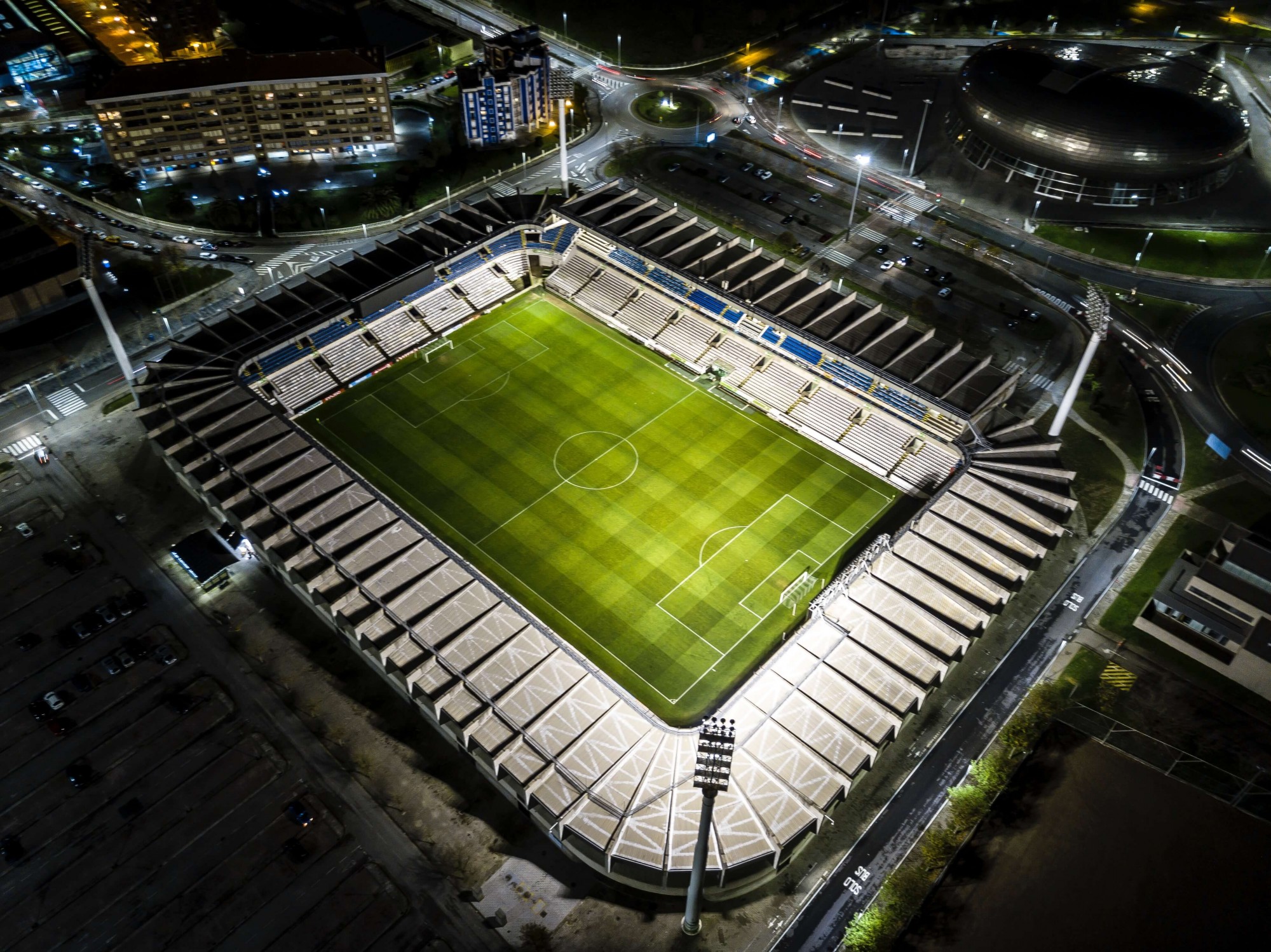
There is something intriguing about football stadiums, those big mastodons and landscape landmarks. A place filled with emotions, joy and bitter tears. It’s so special to see those clips of young fans visiting a team for the first time and being overwhelmed with impressions and for a lot of fans it’s like their second home.
Of course at the time of writing we’re in a very special time with a pandemic making it impossible to play football and go and watch football. We don’t know when the situation will be better again and when it will be possible to go and watch games. This is of course impacting football heavily as no matchdays means no revenue (or as good as no revenue) for a lot of teams, we will take a look at the different sources of revenue and the division as there’s for instance a difference between Premier League, Bundesliga or Jupiler Pro League clubs (think of tv money revenue, but more about that later).
Referencing here to a great webinar hosted by the FBA (The Football Business Academy) and Olivier Jarosz on the impact of COVID-19 where he will touch upon the aforementioned revenue division.
A recent poll conducted by Seton Hall University in the US saw that 72% of the respondents said they wouldn’t attend games without a vaccine, 12% said they would if social distancing rules could be maintained and 13% said they would feel safe attending as in the past; so it’s clear that this will have an enormous impact on attendance. More about the poll here: http://blogs.shu.edu/sportspoll/2020/04/09/nearly-3-of-4-americans-say-they-wont-attend-games-without-coronavirus-vaccine-developed/
There is a lot you can think of all forming part of that one building – and during matchday: starting with the whole development process of course, but also stewarding and crowd management, safety and security, stadium operations (which already entails a lot), lighting, sound, screens in and outside, the stadium announcer (can certainly have an important role), communication, VIP and hospitality, ticketing, fan engagement (lighting and sound and in fact all other aspects like people welcoming you or friendly stewards and so on can all help, it’s not just about technology), sponsoring and activations, measures for people with disabilities, signage, pitch management (which is a real craft) etc. and of course football itself.
In this blog series called ‘For the Love of Stadiums’ I will take a look at the different aspects guided by sources and guides. I will discuss some principles and give some resources to keep you updated.
For this introduction let’s start a bit more with some history about stadiums and some aspects. Stadiums are not a recent phenomenon of course with the word ‘stadium’ originating from Ancient Greece as we can read in the introduction of UEFA’s guide to quality stadiums (and we will take a closer look at that a bit further on). The purpose was to build something to be able to welcome a large number of spectators. This ‘principle’ was still there in the previous century and we probably know some examples of pictures with massive crowds like the ones at Hampden Park and the old Wembley Stadium. Concerns and questions about safety and security principles are popping into your mind then.
Stadiums nowadays are focussing more on hospitality offerings (we will take a look at the Emirates Stadium from Arsenal as an example and also at the new Tottenham Hotspur Stadium) because this is bringing in more money than just gate receipts. A stadium is no longer a place of 90 minutes of play and ‘let’s go back home’. We want to entertain people before, during and after a game, it’s about giving a memorable experience and technology can certainly help with that. There is a bit of a discussion between people saying that stadiums now should be more than just a football temple, like the possibility of hosting concerts and other events in the stadium, having surrounding space for business offices and malls and so on and others saying that it should just be about the team and football.
Another discussion coming back quite often was (or is) the one about having running tracks in the stadium. In the introduction of UEFA’s guide you read: ‘This does not make for a good match atmosphere, as it reduces the “cauldron” effect.’ It’s thus not recommended to do this and looking at some examples you feel that it’s not the best option.
Having a stadium adapted to the current norms, having a place where you feel safe is important, also when thinking of families coming to the games. In another post I listed some resources on women, families and stadiums in particular.
I will quickly tackle some aspects, the idea is then to have separate posts looking at those different topics and others as well.
Health
Because of the current situation this will certainly be a main topic for the coming time. It’s very unlikely (say impossible) that football fans will be able to attend games for the remainder of the 2019-2020 season. When the situation will be better – and we don’t know when that will be yet – health regulations will be and remain very important for a long time. How many fans will be able to attend a game, how long will social distancing be in place, do we need for instance more spots to wash hands, will the temperature of fans attending need to be measured and so on.
Not going to compare (also because I don’t know about that), but I read an article of someone commenting about the Spanish Flu and saying that it took about 4 years for people to feel relative safe again after the pandemic. I mentioned the poll from Seton Hall University before and I can only assume that it will take quite some time before fans will feel safe again attending games.
An article you should read is titled "Bursting the Bubble: Why Sports Aren't Coming Back Soon" https://www.si.com/mlb/2020/04/10/sports-arent-coming-back-soon.
We will not have sporting events with fans until we have a vaccine
Safety and Security
An aspect we sometimes associate with football is hooliganism. This was for instance a common feature in the UK as they gained a reputation in the 60s, 70s and 80s. Not only in the UK of course and we still see that although it changed to some kind of pre-arranged ‘meetings’.
We still see misconduct at games, we have the pyro problems and in recent years we’re living in a new reality which saw the introduction of for instance metal detectors at stadiums (something that’s more common in the US).
When addressing the topic of safety and security some names in the industry are popping up in your mind and also some institutions like the Sports Grounds Safety Authority. They are famous for their green guide which helps sports grounds owners and operators on ensuring a safe environment for spectators.
Coming back to the misconduct part, for an overview of cases and decisions in European football, take a look here: https://disciplinary.uefa.com/ we see that setting off fireworks and throwing objects are regular misbehaviour being reported. As an example from a European competition, in the Netherlands (first and second division, Europa and Champions League and Cup games together with national games and friendlies for a total of 833 games) 519 incidents were reported in the 2017-2018 season in the stadium and 266 outside the stadium. In both cases, the use of pyro was the most reported.
Yes, pyro is still common unfortunately and the message from UEFA is clear: there can be no safe use of pyrotechnics in football stadiums. You can read a report from Dr Tom Smith on this issue and also explaining why this is the case.
Sustainability
Sustainability is getting more and more attention. Think of waste management, alternative energy, traffic (and reducing pressure) among others and there are clubs taking it to a new level like Forest Green Rovers and their plans of building a wooden stadium (this will be an example in a future article).
Sustainability is something FIFA and UEFA are also focussing on and stressing the importance of it. In UEFA’s guide to quality stadiums ‘green architecture’ is mentioned and described as environmentally conscious and sustainable design and construction principles and techniques.
It’s always interesting to read reports on world cup stadiums and the efforts they are taking to make them sustainable like the report on the 2018 FIFA World Cup in Russia. For each stadium the following items were discussed:
- Transport accessibility
- User comfort and safety
- Energy saving
- Water saving
- Use of efficient materials
- Waste management
- Green areas
- Environmental protection
Two common certifications are BREEAM (Building Research Establishment Environmental Assessment Method) and LEED (Leadership in Energy and Environmental Design), the first commonly being used in Europe, the second in USA. They provide a list of parameters and checklists which you should follow and implement.
Linking here to a website and a source of sustainability matters in sports: https://sustainabilityreport.com/
Hospitality
Matchday hospitality got more important in recent years. In the introduction I mentioned Arsenal and when they moved from their iconic Highbury Stadium to Emirates Stadium the figures were clear: they could bring in an additional income of over 1 million pound per match or a 107% increase in the first year after the move.
The hospitality offering at Highbury Stadium were limited where at Emirates you have over 150 VIP boxes. You see this coming back now too, emphasising that it’s important to move forward with new stadium projects because of the extra VIP capacity that could be created and the associated extra revenue.
However, it’s important to mention that European football, and certainly the very lucrative Champions League, can have an impact that’s going both ways.
Entertainment
Not going to discuss fan experience now (this will be for a future blog), but as already stated, a stadium visit should be about more than a 90 minute visit only. Think about fan zones to get people coming earlier to the stadium and also potentially let them spend more then.
There are several examples of course and it’s for sure something to think about. As an example, look at the kids fan zone from Manchester City, they start 3 hours before kick-off.
Two other points I want to mention now are 5G and video screens. There are some clubs looking at 5G implementation like FC Barcelona and Bayern Munich. I could link to several sources, but will leave it to this article from the Barça innovation hub: https://barcainnovationhub.com/the-5g-revolution-experiencing-the-stadium-at-home/
For the video screens, I’m thinking of Valencia CF as they have 5 big screens in their Mestalla Stadium which are centrally controlled to improve the fan experience before and also during games. This also gives the possibility for club sponsors to think about activations.
Accessibility
When this topic pops up, I must immediately think of CAFE or the Centre for Access to Football in Europe. They were established in 2009, funded by UEFA, and are an independent organisation to advise on the integration of disabled people in football.
As from their website: “CAFE aims to support the improvement of accessible facilities and services at stadiums, raise further awareness around access and inclusion within the game, offer advice to disabled football fans and establish a network of disabled supporter groups.”
Giving a small example from Dundee United Football Club, a club in the second division of the Scottish Football League. More than a year ago they launched an accessible virtual tour. As described: “home and away fans will be able to navigate their way around the accessibility parts of the stadium. The virtual tour enables them to virtually ‘walk’ from the perimeter of the stadium to the accessible seating areas, including the accessible toilets within each area.’
OOVIRT is the company providing the tool and you can take a look here: https://virtualtours.oovirt.com/listings/dundee-united-football-club/
Stadium of the future
In 2018, global architectural design firm Populous teamed up with National Geographic to imagine a vision of the future for stadia design and new technology. Versatility was a word coming back just like multipurpose use and also a big focus on sustainability and interactive fan experience.
Take a look at the National Geographic website to get some insights on the history of stadiums and the full design Populous envisioned for the future: https://www.nationalgeographic.com/magazine/2017/07/stadiums/
Cover photo by Willian Justen de Vasconcellos on Unsplash
For the Love of Stadiums: an introduction
This article was posted by Jonas Bogaert on 13/04/2020 in:
About Jonas Bogaert
I'm a sports enthusiast with a special interest in fan experience, digital marketing, data and design. Follow me on Twitter @JonasBogaert.
Contact me